Why We're Different
Most programs teach kids how to dribble and shoot. We teach them how to think, compete and believe in themselves. On the court and beyond it.
The problem with most kids basketball programs
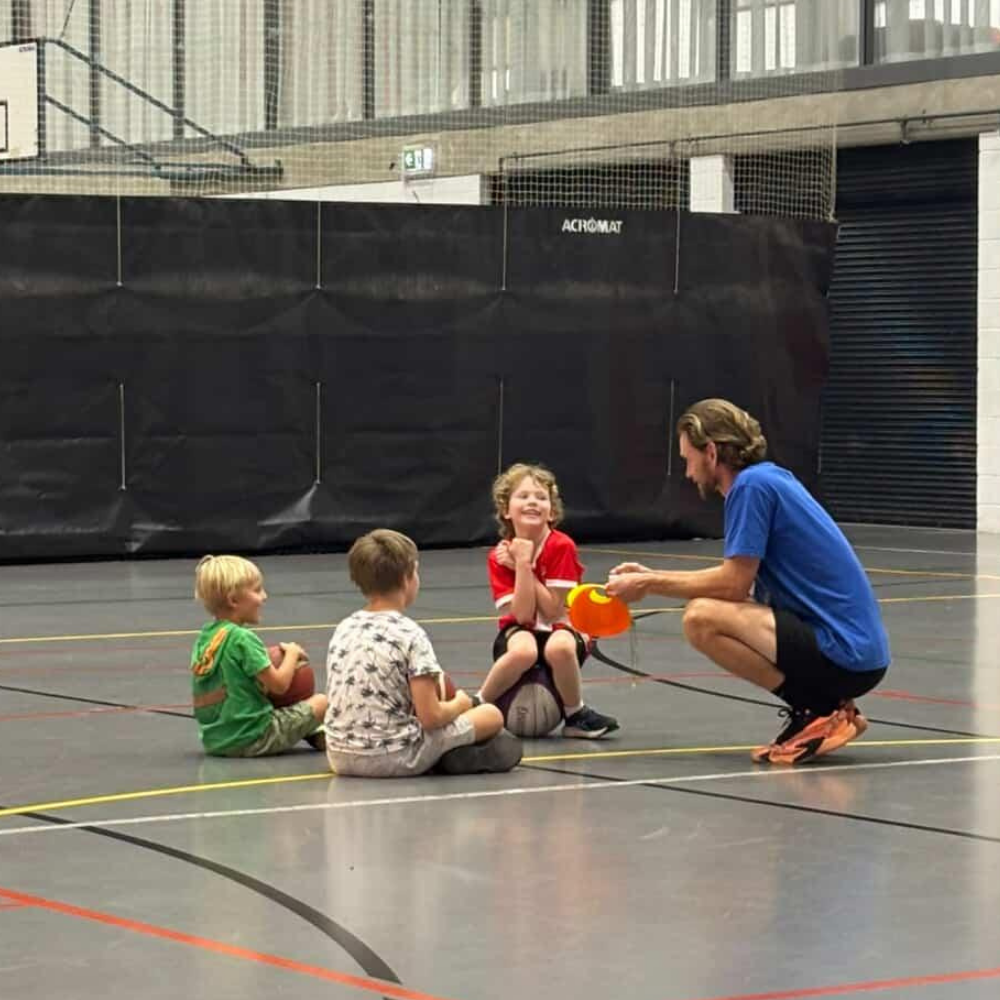
You've probably seen it. Twenty kids on one court. One coach running drills from a whiteboard. Your kid gets maybe ten touches in an hour, spends most of the session standing in a line, and comes home without having learned much at all.
Or the opposite: a program that's all fun and games with no structure. The kids have a great time but never actually improve. They plateau by age 10 and lose interest because they can't see progress.
Then there's the high-pressure pathway programs where winning is everything, kids burn out by 12, and the ones who don't make the cut get left behind with nowhere to go.
None of these are good enough. Your kid deserves better.
We don't just teach basketball
Basketball is the vehicle. What we're really building is a kid who can think, adapt and back themselves when it matters.
Problem-solving under pressure
Our sessions put kids in real game situations where they have to read what's happening, make a decision and execute. No one tells them what to do. The game demands it and they figure it out.
Observation and decision-making
Kids learn to see the court, not just react to it. Where are the gaps? What is the defender doing? What does my teammate need? These aren't basketball skills. These are life skills.
Confidence that goes beyond the court
The confidence we build isn't "good job" stickers. It comes from doing something hard, getting better at it and knowing you earned it. That stays with a kid long after they leave the gym.
Teamwork and emotional intelligence
Kids train alongside teammates with different backgrounds, personalities and skill levels. They learn how to bring the best out of others, how to take on a role for the team and how to be their best regardless of who's around them.
Performing under pressure
Pressure doesn't have to destroy kids. It can build them up. We teach kids to use pressure as fuel. To lock in when the stakes are high instead of falling apart.
Real basketball skills
Movement, ball handling, shooting, footwork and court awareness. Your kid won't just understand the game. They'll be able to play it, at whatever level they're aiming for.
Sport teaches more than the game
The skills your kid builds through competitive sport don't stop at the court. The research is clear: kids who play competitive sports develop leadership qualities, emotional intelligence and resilience that carry into every part of their adult life.
90% of women in C-suite positions played competitive sports. Among those at the very top, 96% played at university level.
Ernst & Young, 2013
Former high school athletes showed significantly higher leadership qualities, self-confidence and self-respect later in life. They also held higher-status jobs.
Cornell University, published in Journal of Leadership & Organizational Studies, 2015
61% of C-suite women said their sports background contributed directly to their career success.
Deloitte survey
This isn't a coincidence. Competitive sport teaches kids how to work as a team, how to bring the best out of people they might not naturally get along with, how to take on a role and commit to it, how to handle failure and how to perform when it counts.
Basketball is one of the best sports for this. Players make a decision roughly every two seconds during live play. Five players on each side means everyone has to read, react and communicate constantly. There's nowhere to hide.
That's the inner game. And it's what separates a kid who can dribble from a kid who can actually play.
How we deliver on this
Three principles that guide every session we run.
12 kids max. Every session.
That's a hard cap, not a marketing line. We turn bookings away before we stretch a session past it. Your kid gets real coaching attention, not three minutes of eye contact in a group of twenty.
Move well first, then play well.
Most programs skip straight to the ball and wonder why kids plateau by age 12. We teach kids how to move, how to land, how to change direction under pressure. When the movement is right, everything else improves on top of it.
The game teaches the skill.
We run small-sided 3 on 3 games where every kid is forced to touch the ball, make decisions and compete. The game presents the problem, the kid finds the solution. No standing in lines. No drills that don't translate to real play.
Meet James
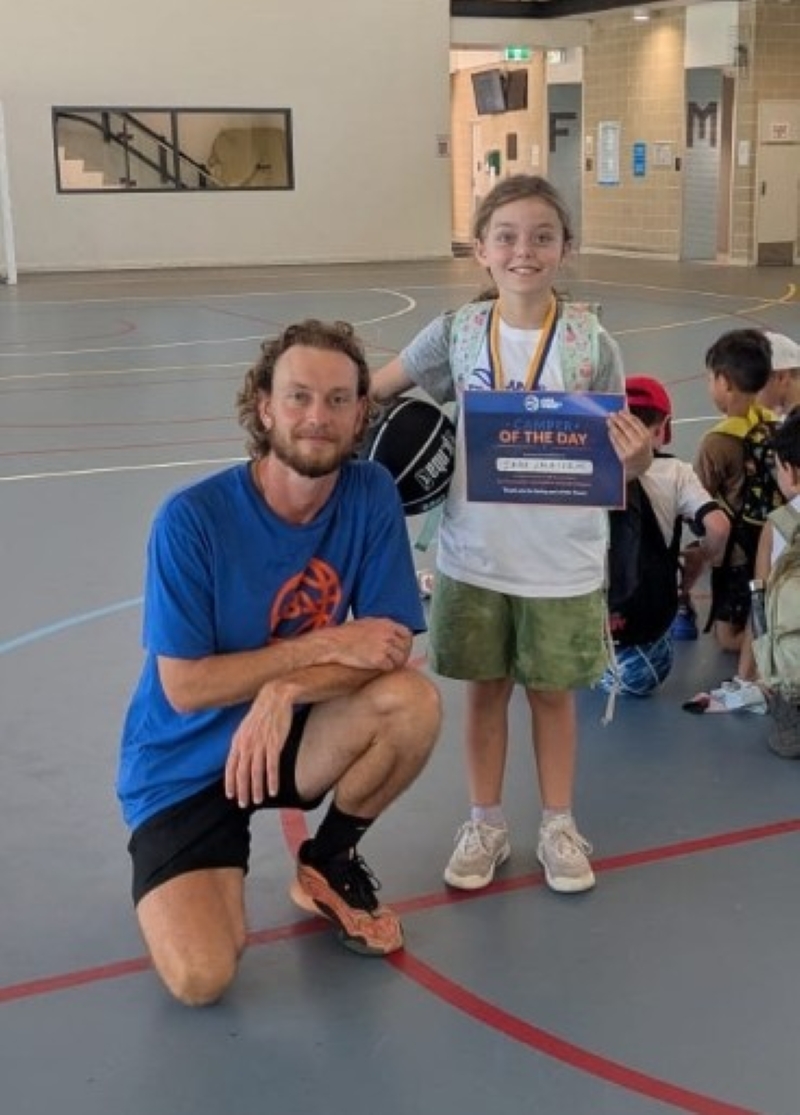
Growing up, I had potential. I was athletic. I had solid hand-eye coordination. And I went after it on the court, always. But I never committed to a sport. I never honoured myself by going after something I truly loved.
Whether it was my upbringing, my environment, or just where I was at, I wasn't in a place where I could nurture that dream. So I let it sit there. Quietly. For years.
Maybe you know the feeling. Maybe you had something like that too. Something you loved as a kid that never quite got the space it needed to grow.
In 2020, I walked past a basketball court on my break at work. And it hit me. Not like a revelation. More like something I'd always known finally said it out loud.
I love this game.
So I started playing again. And honestly? I was a mess. I was so nervous during pickup games that I'd pass up wide open shots. I wouldn't take initiative. I was scrambling out there. But even through all of that, I kept showing up.
What started as fun became a real question: how far can I actually take this?
I studied the greats. I broke down their court vision, their pacing, their intensity. I dove into training programs designed for pros, and in a short amount of time, things changed. I was no longer scared to shoot. My teammates were telling me to shoot. I became someone they relied on.
"But the thing that really changed wasn't my game. It was me. The confidence I built on the court became confidence in who I was. In what I was capable of, when I finally gave myself permission to go after it."
Why I started Inner Game
It wasn't my skillset that got me here. It wasn't my environment. It was me. I looked inward and decided to chase something I'd always wanted. Something that had been sitting there since I was a kid, waiting.
That's what I want to give to the next generation. A place where they get to discover, on their own terms, what they're really capable of. Inner Game was created to be that place.
And maybe, while your kid is out there finding theirs, you'll feel it stir in you too, Mum and Dad. That thing you let go of. That dream you never quite honoured. It's still in there.
How I coach
1. Skills first, always.
Every session is built on proper basketball fundamentals. Footwork. Shooting mechanics. Ball handling. Court awareness. Your kid won't just play. They'll understand the game. And when they understand it, they enjoy it more.
2. Confidence is built, not given.
I don't hand out empty praise. Confidence comes from doing hard things and getting better at them. My job is to set the right challenge. Hard enough that they have to stretch, achievable enough that they get the win. Then we build from there.
3. Every kid deserves to feel like they belong.
Some of my players are on rep teams. Some have never bounced a ball before. Both are welcome. Both will be challenged. Both will walk out feeling like they got better.
I'm direct with the kids, and I'm honest with parents. If your kid's not ready for something, I'll tell you. If they're capable of more, I'll push them. That's the deal.
One coach. One place. Years of growth.
Your child doesn't need a new coach every year. They need one who grows with them.
Foundation
Ages 5-7Fall in love with the ball. We build coordination, basic movement and the confidence to try new things, all through games, challenges and fun.
Development
Ages 8-10They've got the basics. Now we sharpen them. Ball handling, footwork, shooting form and learning what it means to compete and work hard. This is where the biggest skill jumps happen.
Competitive
Ages 11-14They're a basketball player now. Refining their game, building confidence under pressure and preparing for whatever's next. This is where the inner game really matters.
Ready to see what your kid is capable of?
Every kid who trains with us started exactly where yours is right now. The first step is showing up.
No commitment. No pressure. Just a chance to see if it's right for them.